
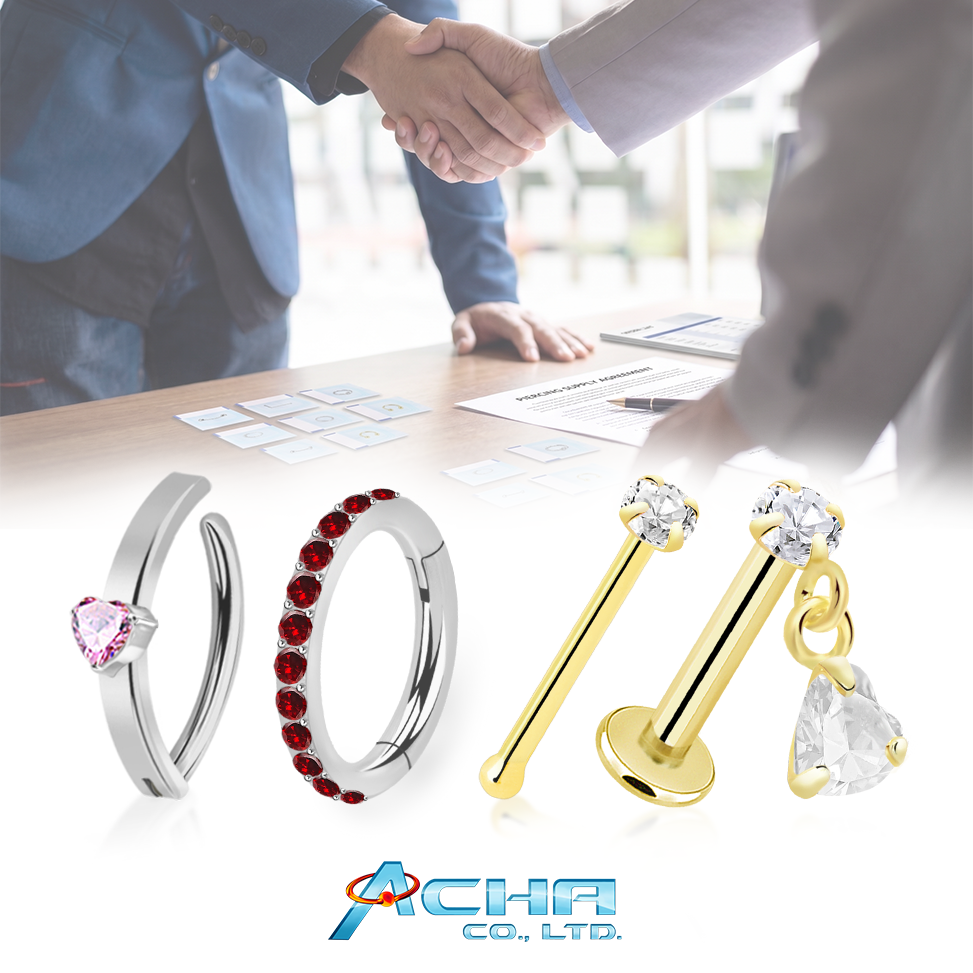
How to Choose a Good Piercing Supplier
10 Key Criteria for Professional Studios
Published on 16th November 2026
Choosing a piercing supplier is not just a purchasing decision: it is a business decision that directly affects your studio’s reputation, workflow efficiency, client safety, and long-term profitability.
In professional piercing, the quality of the jewelry you use reflects the quality of the service you provide. Poor materials, manufacturing inconsistencies, or unreliable sterilization processes can affect product performance and client outcomes. Stock shortages, delayed shipments, and inaccurate orders can create wasted time, workflow disruption, and unnecessary operational costs.
At Acha Direct, we believe the relationship between studios and suppliers should go beyond simple transactions. A reliable supplier should function as a long-term professional partner; one that helps studios maintain high safety standards, operational efficiency, and consistent client experiences with every procedure. That is why we aim to support studios with a combination of certified materials selected for professional body jewelry, like ASTM F-136 Titanium, rigorous quality control, and professional-oriented service designed to help businesses scale with confidence and consistency.
This guide breaks down the key factors professional studios should evaluate when selecting a piercing jewelry supplier, from material certifications and quality control to logistics, sterilization, and customer support. Throughout this guide, we will also show you how Acha Direct approaches each of these areas, including the processes and documentation behind our products and services.

Why Choosing the Right Supplier Matters
In professional piercing, the supplier behind your jewelry influences far more than inventory. It directly affects the quality, safety, and consistency of the experience you provide to your clients.
The jewelry used in a piercing procedure is not just decorative: it becomes part of the healing environment. Low-quality jewelry can contribute to:
- Tissue irritation and allergic reactions
- Delayed healing
- Surface imperfections that harbor bacteria
- Inconsistent threading or sizing
- Poor client experiences and negative reviews
On the operational side, unreliable suppliers can also create:
- Delayed procedures due to stock shortages
- Increased returns and replacements
- Workflow interruptions
- Inventory inconsistency
- Loss of client trust
- Certification and compliance risks
In short, your supplier directly influences client experience, workflow efficiency, and business performance. A reliable partner helps studios maintain professional standards, reduce operational problems, and build long-term client trust. On the other hand, inconsistent suppliers can create complications that impact not only healing performance but also workflow efficiency, reputation, and profitability.
1. Prioritize Appropriate, Certified Materials
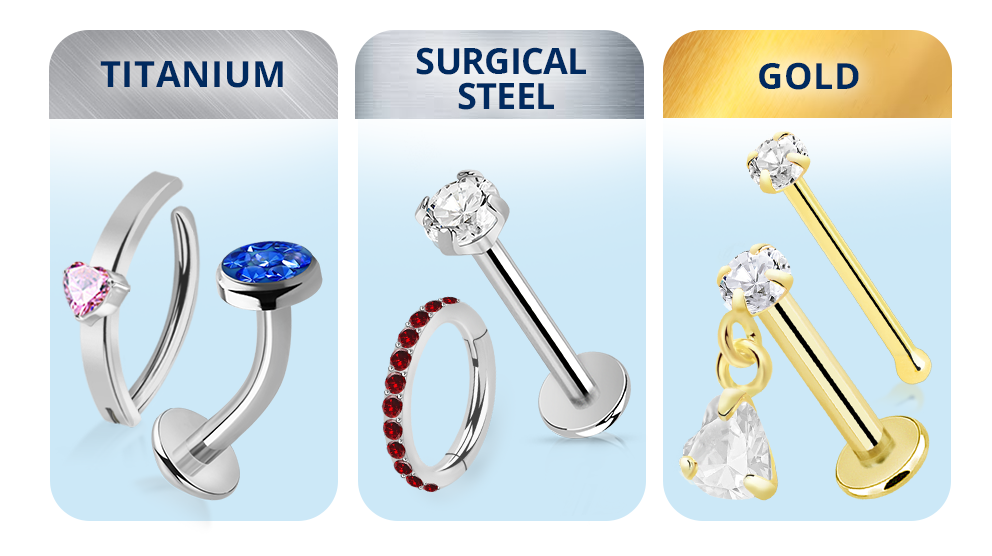
One of the first things any professional studio should evaluate is material quality. A trustworthy supplier should provide jewelry manufactured using certified implant-grade materials, clearly specifying their composition and supporting these claims with evidence such as material tests or certificates. This may include:
- ASTM F-136 Titanium
- Implant-Grade 316L Surgical Steel
- Solid 14k or 18k Gold
These materials are widely recognized within the piercing industry for their biocompatibility, corrosion resistance, and suitability for long-term wear.
Studios should also verify whether suppliers can provide documentation or certification supporting material compliance. A reliable supplier should be transparent about material sourcing, manufacturing standards, and testing processes.
At Acha Direct, we work with certified implant-grade materials and place strong emphasis on consistency, quality control, and compliance with professional industry standards. Our QC team performs dedicated material checks using different testing methods and inspection tools to verify that each piece is made from the material and composition specified. For example, we continuously carry out nickel testing by rubbing the jewelry with a cotton swab and testing solution for approximately 30 seconds; if the swab turns pink, nickel is detected. Any piece that does not meet our material or quality requirements is rejected. We firmly believe that in professional piercing, material quality is the foundation of safety and trust. You can have a look at the composition of each jewel in the section Material Certifications and also learn more about our certificates by clicking here.
When jewelry is presented as meeting a specific material standard, always request material certifications supporting that claim.
2. Evaluate Manufacturing Quality & Precision
Even high-quality materials can become problematic if manufacturing standards are inconsistent. Professional jewelry should demonstrate smooth and consistent surface finishing, accurate dimensions and tolerances, reliable threading or secure threadless fit, uniform polishing quality, secure gemstone settings, and strong structural integrity.
Small defects that may appear purely cosmetic can actually impact healing performance and client comfort. Rough surfaces, inconsistent threading, poor polishing, or inaccurate sizing can increase tissue irritation, complicate insertion, and negatively affect the healing process. Proper packaging is also important, especially to ensure that your purchase arrives in mint condition.
In addition, a reliable supplier should have a clear, structured, and transparent quality control system in place. Some important questions to ask when evaluating a provider include:
- Are products inspected individually?
- How are defects identified and handled?
- Are dimensions and threading verified?
- Is microscopic inspection used?
- What is their rejection policy for defective products?
- Are functionality and wearability tests performed?
At Acha Direct, we perform quality control not just as a checkpoint; it is part of the entire production philosophy. That’s why we apply multi-stage inspections, precision verification, and strict rejection standards to help ensure we identify inconsistencies before products are released for shipping and that every piece meets consistent quality expectations. For example, with crystal bananas such as BN2CG, our QC team confirms the material, compares the color shade with our approved stock standard, measures the gauge and post length against the PO specifications, checks the post angle and threading, and uses an electronic microscope to identify cracked or cloudy stones, scratches around the setting, or sharp edges on the crystal and post. Because in professional piercing, even the smallest detail can make a noticeable difference in both safety and performance.
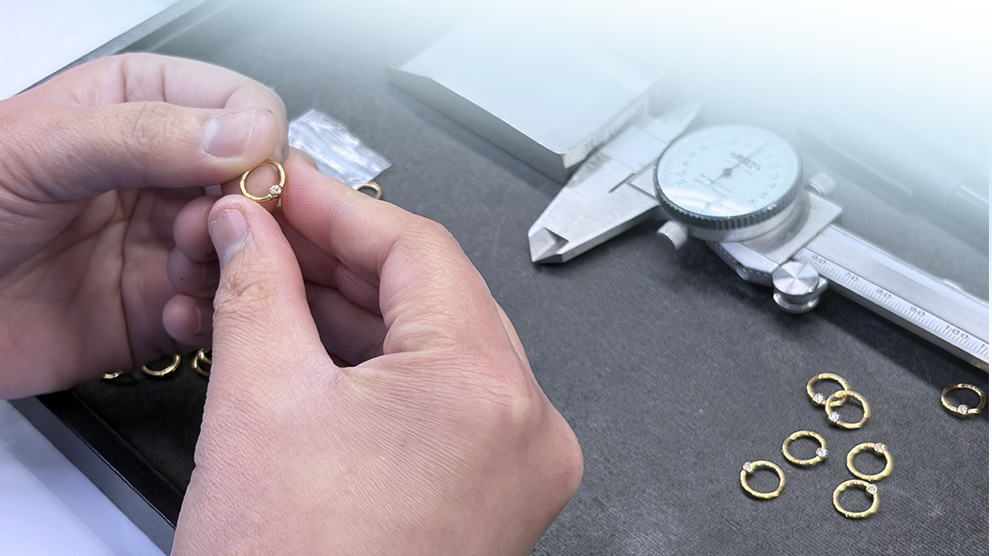
In the following image, you can see a member of the Acha QC team performing dimensional verification before products are approved for shipment. You can learn more about our QC control department and strategy in our blog, How Our Quality Control Can Save You Time and Money.
3. Check Sterilization Options
Modern piercing studios are increasingly looking for suppliers that can provide pre-sterilized jewelry solutions as a way to simplify workflows, improve efficiency, and maintain consistent safety standards. This can help reduce:
- In-house jewelry sterilization workload
- Packaging and pouching time
- Dependency on autoclave capacity and its overall use for jewelry processing
- Operational bottlenecks during busy schedules
When evaluating pre-sterilized jewelry, studios should verify how the sterilization process is performed, validated, documented, and traced. Professional studios should carefully check:
- Which sterilization method is being used
- Whether the process is externally validated or certified
- Compatibility with implant-grade materials
- Packaging integrity and sterility traceability
- Individual sterile-barrier packaging designed to maintain sterility until use, provided package integrity is maintained
- Proper storage and handling
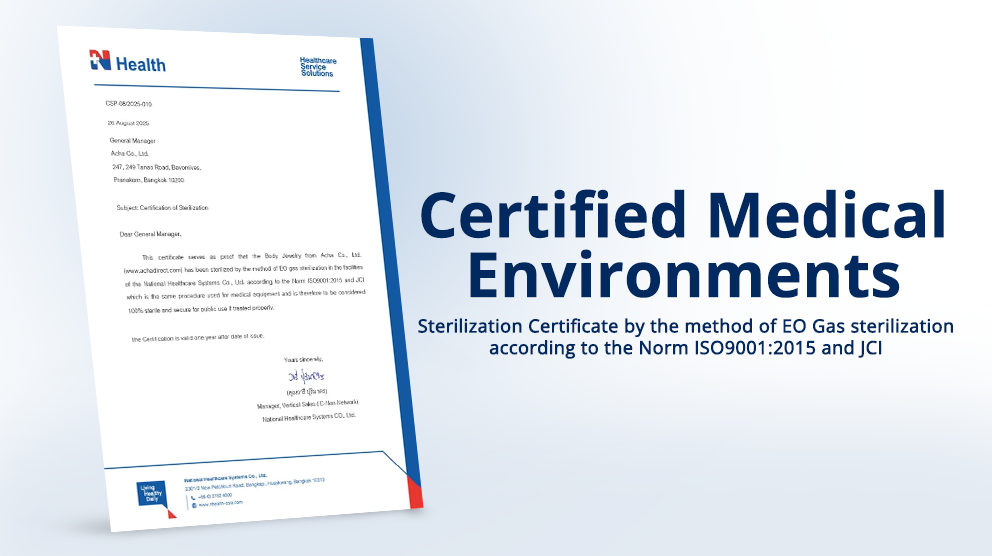
For example, EO Gas (ethylene oxide) sterilization is widely used in medical environments because it allows deep sterilization without damaging delicate materials or compatible products that may not be suitable for high-temperature steam processing. At Acha Direct, we offer EO gas sterilization performed in certified medical environments (check our process certificates here), with documentation available to support professional customers in evaluating applicable requirements and regulations, helping studios access ready-to-use jewelry solutions while maintaining high standards of sterility, material safety, and product integrity. You can check all our ready-to-ship pre-sterilized collection here.
4. Review Product Range & Compatibility
A good supplier should offer enough flexibility to support the different technical, aesthetic, and operational needs of professional piercing studios. Every studio works with a variety of piercing types, jewelry preferences, and client requests, so having access to a broad and consistent product range is essential. A wide catalog can reduce the need to work with multiple suppliers, simplifying purchasing and inventory management, and avoiding the time wasted on duplication of work. Important considerations include:
- Variety of jewelry materials, styles, gauges, and sizes
- Availability of both threadless, internally threaded, and externally threaded options
- Compatibility across collections and components
- Consistent sizing standards
- Matching tops, bases, and attachments
- Possibility of customization
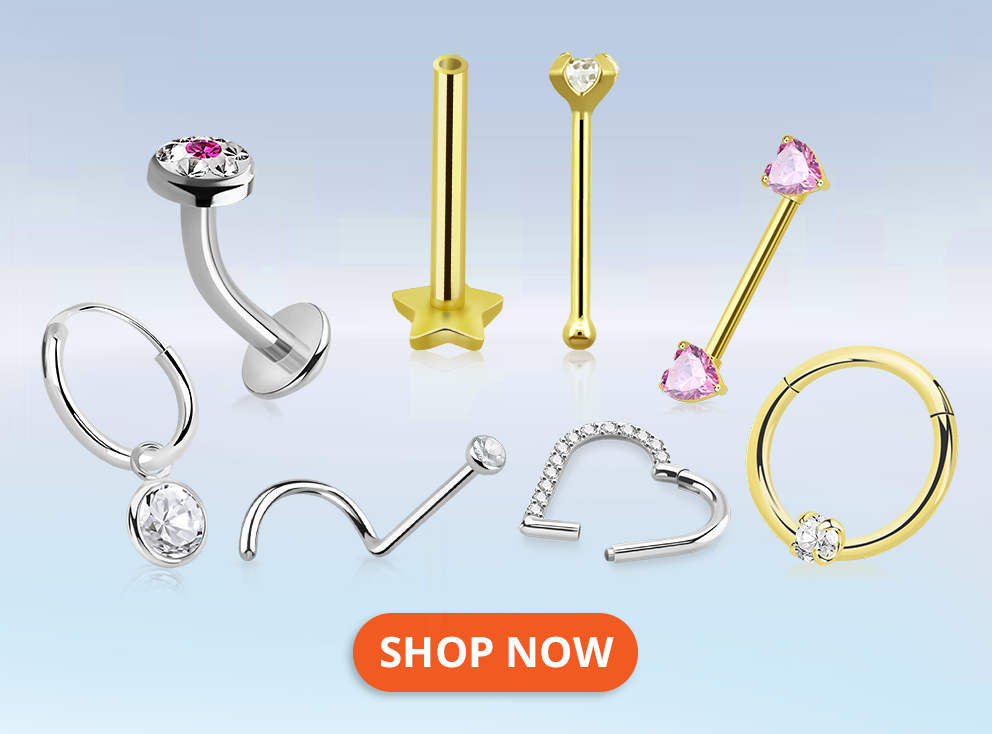
At Acha Direct, we offer a broad and constantly evolving catalog, with more than 180.000 SKUs, designed to support the diverse needs of professional piercing studios. From threadless and internally/externally threaded jewelry to a wide variety of styles, sizes, attachments, materials, and collections, our goal is to give studios the flexibility to work with consistent systems while offering more options to your clients.
5. Analyze Logistics & Stock Reliability
Even excellent jewelry becomes a problem if inventory and shipping are unreliable. Supply chain reliability becomes especially important for high-volume studios or businesses operating across multiple locations.
Before choosing a supplier, studios should evaluate:
- Ready-to-ship catalog
- Stock consistency
- Fast shipping times
- International delivery capabilities
- Packaging protection
- Order accuracy
- Communication responsiveness
- Low MOQ
- Stock availability in large amounts
At Acha Direct, we understand that professional studios rely on predictable inventory and efficient logistics to operate smoothly. That’s why we focus on maintaining reliable stock management performed by our Product Team, accurate order processing, and international shipping delivery times of 3-5 business days. All designed to support studios consistently, efficiently, and very quickly. If you want to know more about how we work, you can check out our shipping policy and our FAQ section or contact our team straightaway here.
6. Look Beyond Price Alone
Choosing cheap jewelry suppliers may seem cost-effective in the short term, but in professional piercing, low pricing could come with hidden operational and reputational costs later on. Studios should compare what is included in the price: material documentation, manufacturing consistency, QC, sterilization options, support, returns, and product reliability.
When a lower price comes from compromising any aspect of the jewelry or the workflow, the resulting costs can include:
- Higher return and replacement rates
- Increased healing complications
- Faster product degradation
- Greater client dissatisfaction
- Additional time spent resolving issues and complaints
Professional studios should evaluate the overall value, not just the unit price. Factors such as manufacturing consistency, material certification, sterilization options, product reliability, and customer support often have a much greater impact on long-term business performance than small price differences between suppliers.
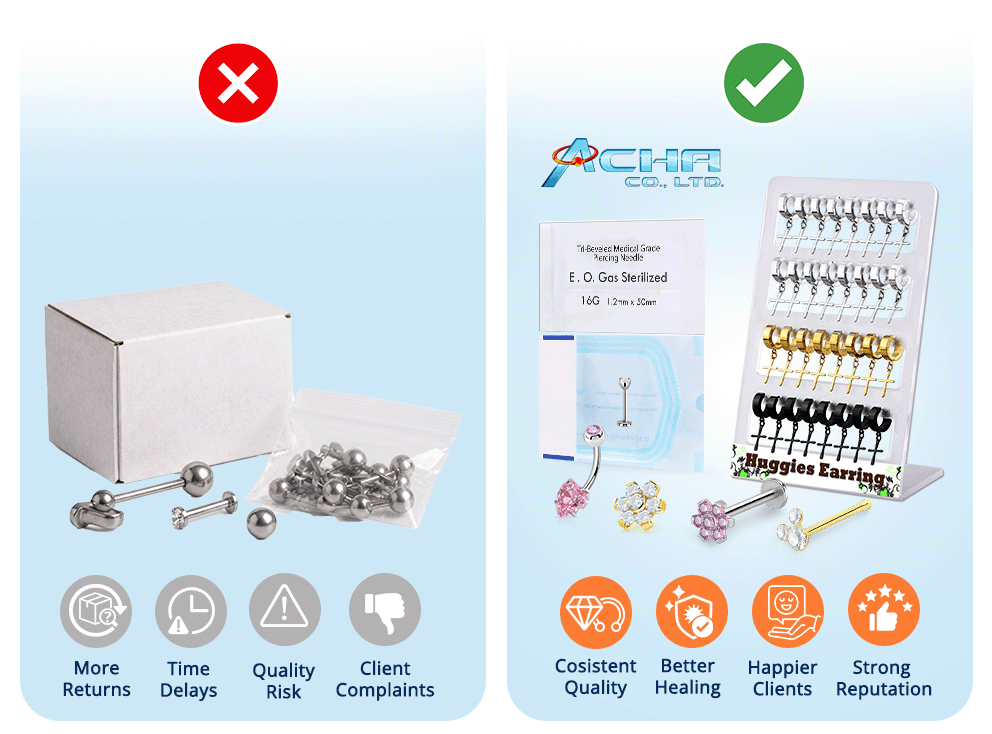
At Acha Direct, we consider that professional studios should not have to choose between quality and affordability. Our goal is to offer one of the strongest quality-to-price ratios in the industry, as you can see by comparing with other worldwide suppliers, by combining certified materials, precision manufacturing, rigorous quality control, and competitive pricing designed specifically for professional studios. Our bigger scale and high wholesale volume allow us to keep fair prices and be competitive while maintaining our material and quality control requirements. At the same time, our extensive support team makes sure that you get personalized service without additional cost.
This way, Acha offers you fair prices, considering unit price + replacements + probability of defective products + staff time + returns + inventory problems + sterilization/preparation time.
7. Assess Industry Knowledge & Professionalism
A supplier that truly understands professional piercing should be able to speak confidently and transparently about the technical standards behind the products they offer. Some topics include:
- Implant-grade materials and certifications
- Sterilization methods and standards
- APP recommendations and industry best practices
- Threadless and internally threaded jewelry mechanisms
- Manufacturing precision and tolerances
Technical knowledge helps customers receive accurate product information and allows them to verify whether the products offered meet their requirements.
At Acha Direct, we have an extensive Sales Team that allows us to offer a tailor-made service with a dedicated account representative to support your needs. With more than 40 years of combined experience, they are ready to answer your questions and make recommendations based on your country, market, and style. As mentioned, we see our customers as partners and consider it our duty to provide you with product recommendations, account assistance, order support, material and sterilization information, and any other support you may require.
8. Customer Support Matters More Than Most Studios Realize
Even the best suppliers can occasionally encounter delays, inventory issues, or logistical challenges. What truly makes the difference is how quickly, clearly, and professionally those situations are handled. Strong support saves studios time, stress, and operational disruption. Professional suppliers should offer:
- Fast and responsive communication
- Clear policies and transparent processes
- Efficient issue resolution
- Technical guidance when needed
- Consistent account and order support
- Friendly attitude and empathy
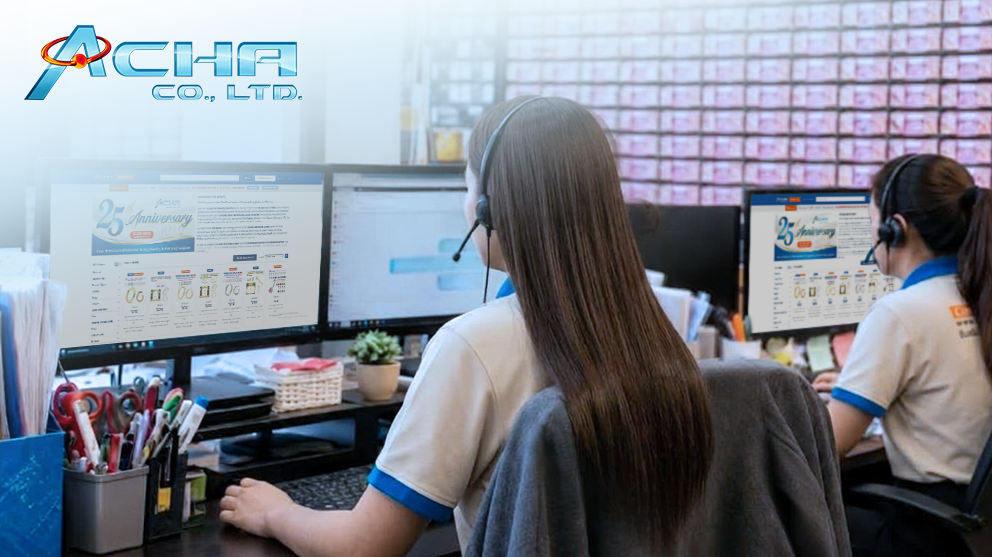
At Acha Direct, we understand that professional studios need more than just products. They need reliable support they can count on. That’s why we focus on maintaining responsive and clear communication, personalized assistance, and efficient problem-solving (we usually reply within 24 hours, and up to 48 hours for more complex inquiries) to help our clients operate with greater confidence and consistency. We have six sales representatives, able to speak English, German, French, Spanish, and Thai, who can assist you at any time during your purchasing process, with excellent attention to detail, and always glad to help.
You can contact our sales team via email, telephone, or through our web form here.
9. Returns, Claims & Product Guarantees
A reliable supplier should stand behind the quality of its products with clear return and replacement policies. A strong guarantee policy helps studios reduce risk, protect their investment, and maintain operational continuity. It also demonstrates that the supplier is willing to take responsibility when problems occur. Before choosing a supplier, studios should verify:
- Return and replacement procedures
- Coverage for defective or damaged products
- Claim-response times
- Clear refund, replacement, or credit options when applicable
- Transparency and ease of communication
At Acha Direct, we understand that quality does not end when an order is delivered. That’s why we provide responsive support and efficient solutions whenever issues arise after the purchase is made, helping studios restock with confidence and minimize operational disruptions.
You can check our return policy by clicking here.
10. Think Long-Term, Not Transactional
The strongest supplier relationships are built as long-term partnerships, not occasional transactions. In professional piercing, consistency over time is what allows studios to grow sustainably, maintain quality standards, and operate more efficiently.
Studios looking to scale should consider whether a supplier can maintain:
- Consistency across products and batches
- Predictable inventory and delivery times
- Scalability as the business grows
- Reliable product quality
- Real industry expertise and support
Long-term partnerships create smoother workflows and stronger business stability over time. At Acha Direct, we firmly believe that successful partnerships are built through reliability, transparency, and long-term consistency. We have been in the industry for more than 25 years, relying on loyal clients from more than 70 countries. Our goal is not simply to supply jewelry, but to support professional studios with dependable products, stable service, and solutions designed to grow alongside their business over time. We align our business with your studio to ensure that what is good for you is also good for us and vice versa, so you always benefit from interacting with us. This is crucial to preserving our partnership over the long term, which is the core of our business concept.
Why Studios Choose Acha Direct
Choosing the right supplier is ultimately about finding a partner that combines quality, consistency, reliability, and industry understanding. At Acha Direct, we focus on supporting professional studios with solutions designed around the real operational needs of the piercing industry.
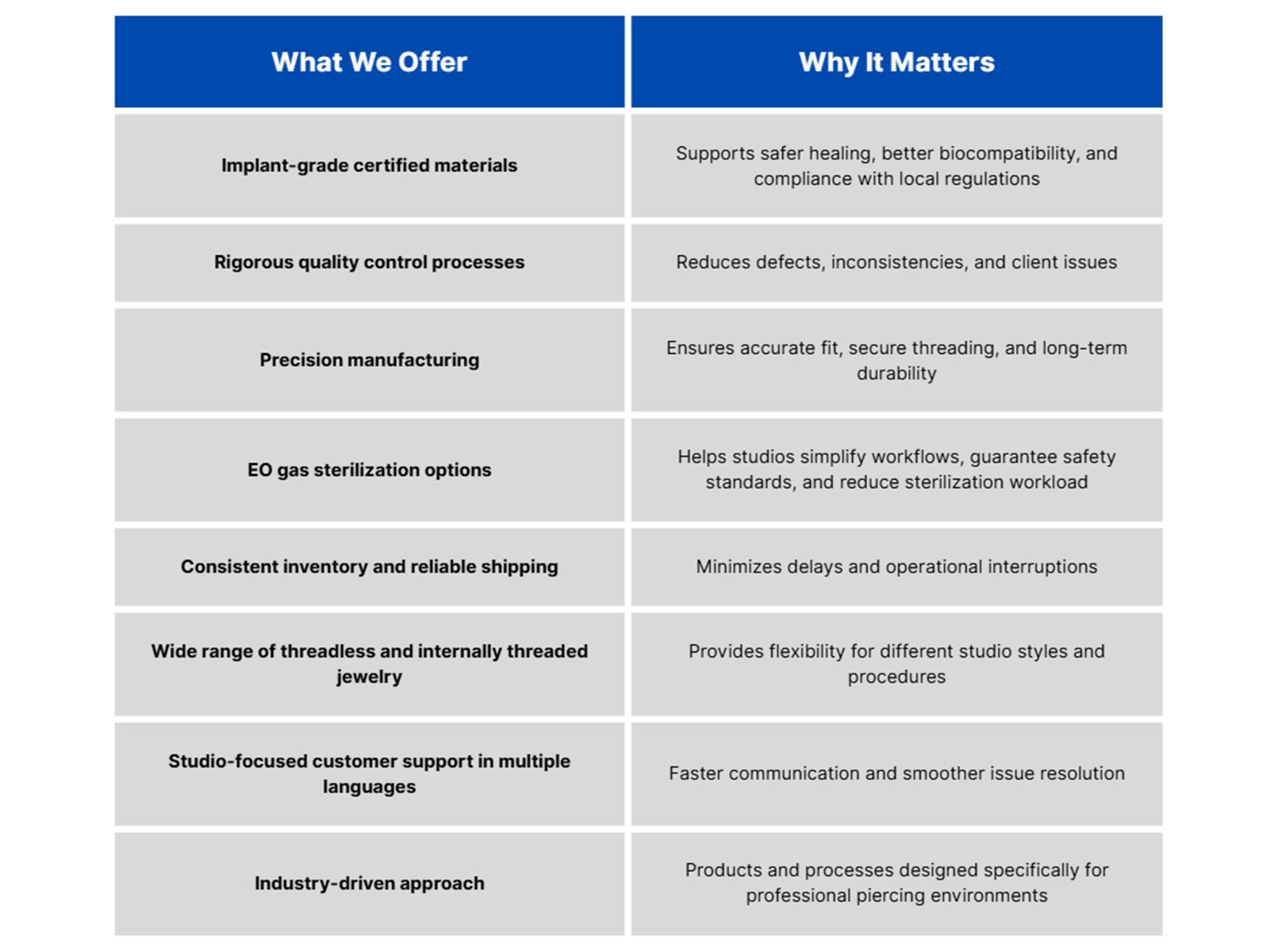
At Acha Direct, we always keep in mind that professional studios need more than just jewelry. They need consistency they can trust, quality they can rely on, and a supplier that understands the standards their business depends on every day.
Final Thoughts
Choosing a piercing supplier is ultimately about trust. The supplier behind your jewelry directly impacts not only product quality, but also the consistency, efficiency, and reputation of your studio over time.
The right supplier helps studios maintain:
- Safer procedures
- Consistent quality
- Efficient workflows
- Better client experiences
- Stronger long-term reputation
At Acha Direct, we proclaim that professional studios deserve more than just a product catalog. A supplier should be evaluated by what customers can verify: material documentation, consistent quality-control processes, reliable product availability, transparent pricing, sterilization options, and professional after-sales support. By investing in these areas, our goal is to help studios reduce avoidable problems, simplify purchasing, and access professional jewelry at a fair wholesale price. We care about you and your business, so you can succeed. That is the key to our own success: You always come first.
Frequently Asked Questions
What materials should professional piercing jewelry use?
ASTM F-136 titanium, implant-grade 316L surgical steel, and solid 14k or 18k gold are among the most trusted options.
Why is implant-grade jewelry important?
Using appropriately specified, certified materials helps reduce material-related risks and gives studios clearer information when assessing suitability for a piercing. It mitigates irritation, improves healing, and ensures better long-term biocompatibility. Studios should also confirm the requirements that apply in their jurisdiction: it is fundamental to comply with local regulations.
Should studios choose pre-sterilized jewelry suppliers?
Many studios prefer pre-sterilized options because they simplify workflows and reduce sterilization workload. Acha offers EO gas sterilization for eligible jewelry; you can check both our sterilized products and the certifications on our website.
Is cheaper jewelry always a bad option?
Price alone does not determine quality. Studios should compare materials, manufacturing, documentation, QC, support, and total cost alongside the unit price. Although it might seem wise from the immediate cost perspective, low-cost jewelry can come with inconsistent quality and hidden operational costs.
Why does quality control matter in piercing jewelry?
Because small defects can affect healing, comfort, and overall client safety.
How should studios evaluate price when comparing suppliers?
Compare the unit price together with product consistency, material documentation, replacement rates, logistics, and support to understand the real long-term cost.
Sources
Association of Professional Piercers (APP)
Industry guidelines for safe piercing practices and approved jewelry materials.
https://safepiercing.orgASTM International
International standards for implant-grade materials used in body jewelry manufacturing.
https://www.astm.orgISO – International Organization for Standardization
Global standards related to manufacturing quality and material compliance.
https://www.iso.orgThe Piercing Bible – Elayne Angel
Professional reference covering jewelry standards, healing, and piercing best practices.
https://www.piercingbible.com/