

Autoclave Best Practices for Piercing Studios
A Technical Step-by-Step Sterilization Guide for Compliance, Safety & Efficiency
A Technical Step-by-Step Sterilization Guide for Compliance, Safety & Efficiency
Published on 21st October 2026
Sterilization in professional piercing is not a procedural formality: it is a critical control point that directly impacts infection prevention, healing outcomes, and regulatory compliance. In a clinical environment where instruments come into direct contact with open tissue, even the smallest deviation in sterilization protocol can introduce microbial risks with serious consequences for both the client and the studio.
At Acha Direct, we view sterilization not as an isolated step but as part of a fully integrated safety system. We believe that consistency, validation, and process control are what truly define professional standards in modern piercing studios. It’s not just about achieving sterility: it’s about being able to prove it, repeat it, and trust it every single time.
The autoclave, when correctly operated, delivers validated sterilization through saturated steam under pressure, effectively eliminating bacteria, viruses, fungi, and spores. However, this level of effectiveness is only achieved when all variables (temperature, pressure, time, and steam penetration) are precisely controlled. In other words, the equipment itself does not guarantee safety: execution does.
This guide provides a technical, industry-aligned autoclave protocol, designed to help piercing studios standardize sterilization, reduce risk, ensure compliance, and ultimately optimize operational performance without compromising safety. Throughout this guide, we will also distinguish between the sterilization of reusable instruments and the sterilization of body jewelry. While reusable instruments may require in-house steam sterilization between uses, jewelry can either be sterilized in-house when compatible with the process or supplied pre-sterilized through a validated sterilization method. The appropriate approach depends on the item, its material, its intended use, and applicable manufacturer and regulatory requirements.
In our experience, strong sterilization practices increasingly distinguish well-controlled professional operations and help studios maintain consistent standards, so dedicating the time to fully understand the process and perform sterilizations properly will make a real difference in your business.
Disclaimer: This guide provides general professional guidance. Studios should always follow applicable local regulations, the sterilizer manufacturer's instructions, and validated procedures for their equipment and load.
Why Autoclave Protocol Accuracy Is Non-Negotiable
Sterilization failures are rarely visible initially, but their impact is real, measurable, and often irreversible. When protocols are not executed with precision, the risks extend far beyond a single procedure and can affect both clinical outcomes and long-term business performance.
Inadequate sterilization can result in:
- Survival of microorganisms due to incomplete steam penetration
- Delayed healing due to allergic reactions or damaged tissue
- Cross-contamination between instrument loads
- Non-compliance with APP, ISO, local health regulations, and professional best-practice guidance
- Increased legal exposure and damage to the studio's reputation
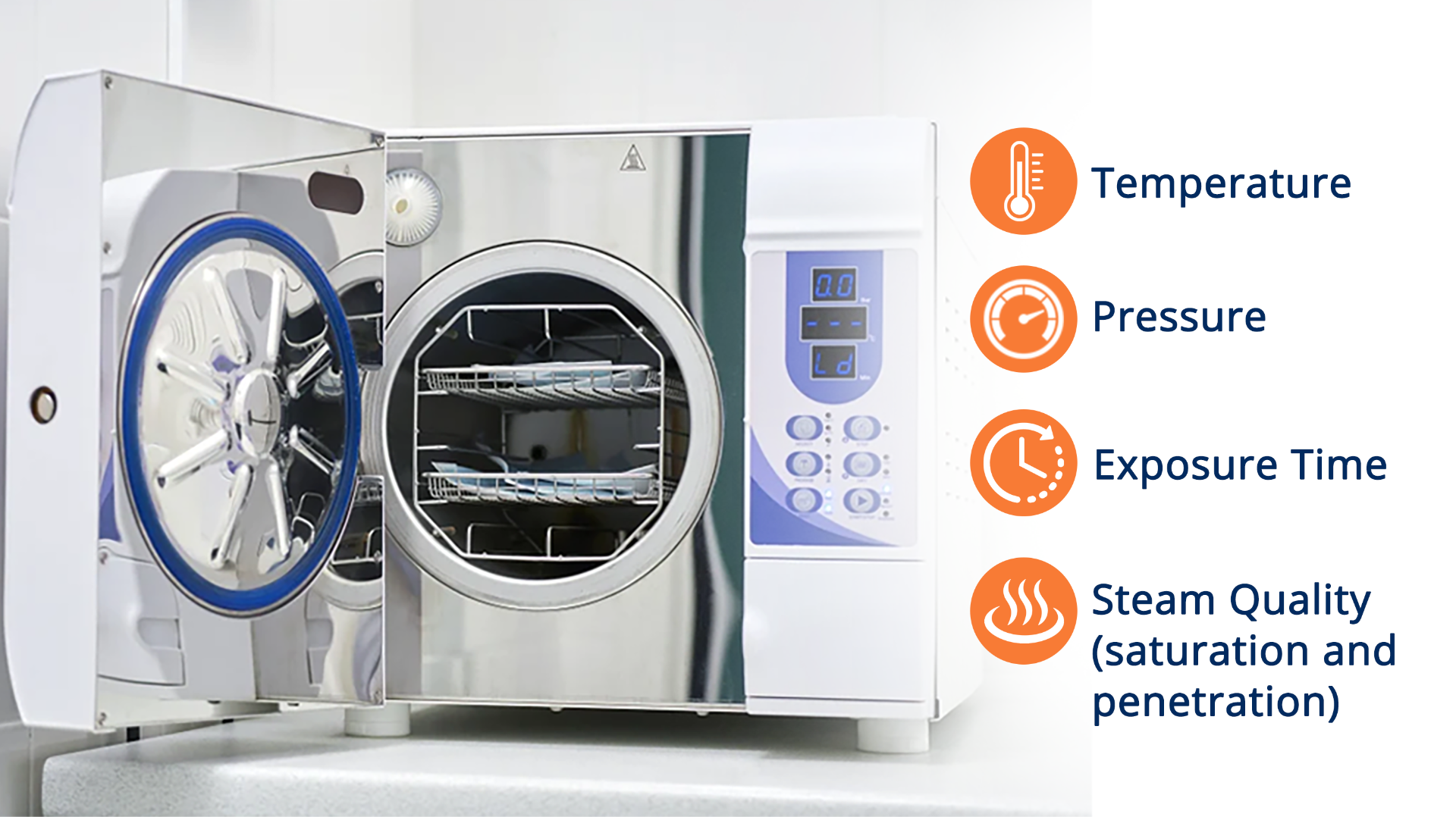
From a technical standpoint, sterilization is not a single action: it is the result of a controlled process. According to industry guidelines such as those from the Association of Professional Piercers (APP), effective autoclave sterilization depends on four critical variables working in perfect balance: temperature, pressure, exposure time, and steam quality (saturation and penetration).
If even one of these parameters falls outside its validated range, the integrity of the entire cycle is compromised. There are no partial results in sterilization: only success or failure.
Technical Requirements Before Running an Autoclave
At Acha Direct, we believe sterilization should be understood as a complete system rather than a standalone tool. Based on our experience working with professional studios worldwide, the difference between compliance and excellence lies in how consistently protocols are applied and validated, not simply in the equipment used. Therefore, before any sterilization cycle is initiated, studios must ensure that the entire system is properly configured and controlled.
A compliant setup includes:
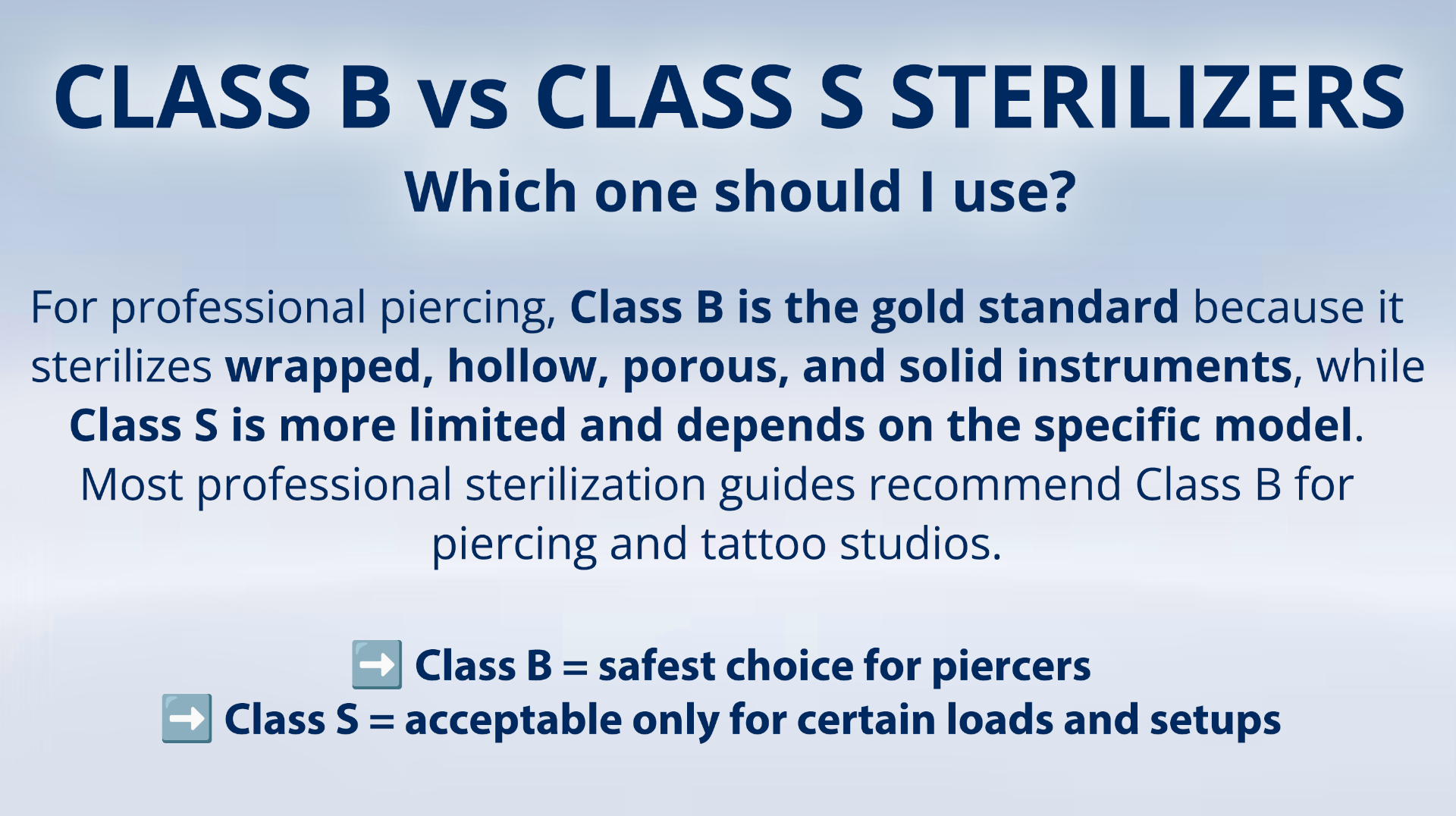
- Use of a Class B (vacuum) autoclave, capable of sterilizing hollow, porous, and packaged instruments through effective air removal and steam penetration. Note: Class S autoclave can sterilize most items, except the above-mentioned.
- Alignment with recognized standards such as EN 13060 (last version 2025) and ISO 17665 (last version 2024), which define requirements for steam sterilization processes.
- Clear physical separation between dirty, clean, and sterile zones to prevent cross-contamination.
- Routine biological monitoring (spore testing) to verify that the autoclave is consistently achieving effective sterilization. As highlighted in The Piercing Bible, results should be documented and retained as part of the studio’s quality control records. It has to be done, at least, monthly, although it is recommended by different producers and the Association of Professional Piercers (APP) to do it on a weekly basis.
- Well-defined and documented Standard Operating Procedures (SOPs) to ensure consistency across all staff members.
- Proper training in infection control and sterilization protocols, ensuring that procedures are executed correctly every time.
Jewelry Compatibility: What Should NOT Be Autoclaved
When processing body jewelry in-house, it is important to distinguish jewelry that is compatible with steam sterilization from materials or components that may be damaged by autoclave conditions. Autoclaves operate using high temperature, pressure, and saturated steam, which can compromise materials that are porous, heat-sensitive, coated, glued, or structurally unstable. Placing non-autoclavable materials inside an autoclave can result in deformation, cracking, discoloration, adhesive failure, or material degradation.
Materials that should NOT be autoclaved include acrylic, resin, wood, bone, horn, leather, and non-medical-grade plastics. Jewelry with glued-in stones, decorative coatings, plating, enamel, or unknown material composition should also be excluded unless the manufacturer specifically confirms that the COMPLETE PIECE, not only the headline material, is autoclavable. When in doubt, the item should not be autoclaved.

This is especially important because sterilization is not only about eliminating microorganisms; it is also about preserving the integrity of the item being sterilized. A damaged or degraded piece of jewelry may no longer be safe for use, even if the sterilization cycle itself was successful.
Before any item is processed, studios should verify material compatibility, manufacturer instructions, and whether all components of the piece can withstand repeated exposure to autoclave conditions. In Acha, we are especially concerned about material composition and its adequate use: for every product, you can see a material certificate attached to the item as well as check the material certification section on our website.
Validated Step-by-Step Autoclave Protocol
In this section, we break down the full process into a validated, step-by-step protocol, highlighting the critical control points that determine whether a cycle is successful—or compromised. This is the typical workflow for processing reusable piercing instruments, highlighting the critical control points that help ensure effective steam sterilization. Jewelry that is sterilized in-house should only be included when the complete piece has been confirmed as compatible with the selected autoclave cycle.
1. Decontamination & Pre-Cleaning (Bio-Burden Reduction)
All instruments should be cleaned as soon as possible to prevent debris from drying and adhering to surfaces. This involves:
Sterilization does not start inside the autoclave; it starts immediately after instrument use. The goal of this stage is to reduce bioburden and eliminate organic material that could interfere with steam penetration.
- Removing visible contamination
- Using enzymatic detergents to break down organic matter
- Applying ultrasonic cleaning to reach microscopic debris that manual cleaning cannot remove
After cleaning, instruments must be thoroughly rinsed (preferably with deionized water) and completely dried before moving to the next stage.
2. Inspection & Instrument Integrity Control
Before packaging, every instrument must be carefully inspected. Sterilization is only effective if the instruments themselves are in proper condition. This includes:
- Checking for surface imperfections, corrosion, or structural damage
- Verifying that moving parts (such as hinges) function correctly
- Removing any instrument that shows signs of wear or defect from circulation immediately
Compromised tools not only affect sterilization outcomes but also increase clinical risk during procedures.
3. Packaging & Sterilization Barrier System
Packaging plays a critical role in maintaining sterility after the cycle is complete.
Studios should use medical-grade sterilization pouches compliant with standards such as EN 868, ensuring proper sealing and the inclusion of chemical indicators to verify exposure conditions. Instruments must be placed without overcrowding or compression, allowing steam to circulate freely within the packaging.
Single-use packaging should never be reused, and any compromise in sealing invalidates sterility.
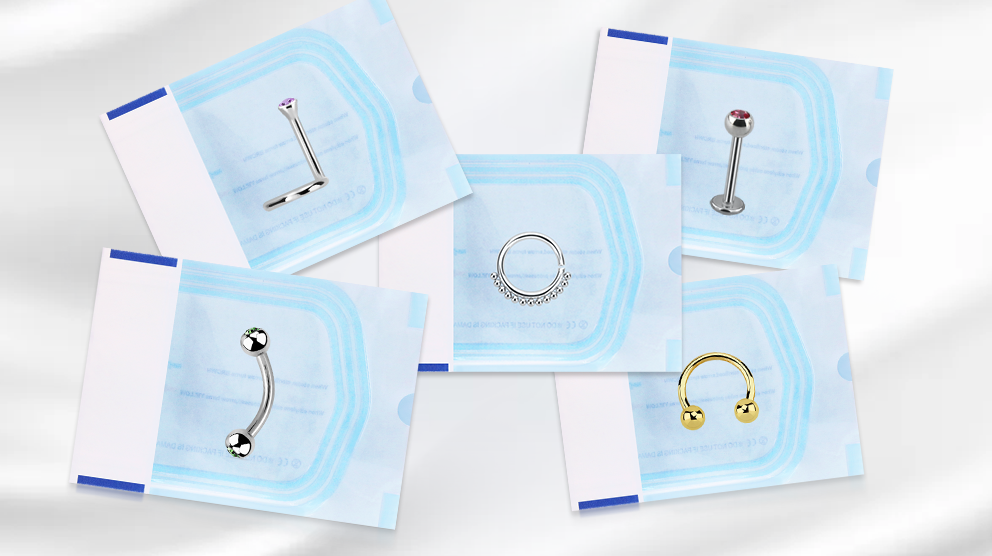
Important: All sterilized items should be packaged individually to guarantee that they remain in proper condition at all times. In the following image, you can see Acha's sterile packaging protecting the body jewelry and tools from contamination.
4. Load Configuration (Critical for Steam Penetration)
Even with proper cleaning and packaging, incorrect loading can compromise the entire cycle.
Inside the autoclave chamber, items must be arranged to allow unrestricted and effective steam circulation and penetration. To do so, it is important to:
- Maintain spacing between packs
- Avoid chamber overcrowding (follow the manufacturer’s validated load configuration, generally indicating not to exceed a maximum of 75-80% of the full capacity)
- Position pouches to allow vertical or lateral steam flow
- Follow manufacturer-specific load diagrams
One helpful and easy, although informal, way to be safe is to apply the “two-finger rule”, which is giving 2 inches of space between products introduced in the autoclave. This will prevent overcrowding and will allow proper steam flow.
Effective sterilization requires full steam contact. Any trapped air can lead to incomplete microbial elimination.
5. Cycle Selection & Parameters
Selecting the correct sterilization cycle is essential for achieving validated results.
For most piercing studio applications, wrapped instruments are processed at 134°C (273°F) with a defined exposure time, typically between 3 to 5 minutes depending on the autoclave and load. These parameters must align with manufacturer specifications, load, packaging, and validated standards and instructions.
Sterilization depends on the precise control of temperature, pressure, and time, all working together within a validated cycle. Shortcuts, such as interrupting cycles or selecting incorrect programs, completely invalidate the process.
6. Process Monitoring & Documentation
Every sterilization cycle must be monitored and recorded to ensure traceability and compliance.
This includes:
- Reviewing mechanical data from the autoclave (time, temperature, pressure)
- Verifying chemical indicator changes
- Maintaining detailed cycle logs (manually or digitally)
Without proper documentation, there is no way to confirm that sterilization has occurred. In regulated environments, this also means non-compliance.
7. Drying Phase & Post-Cycle Handling
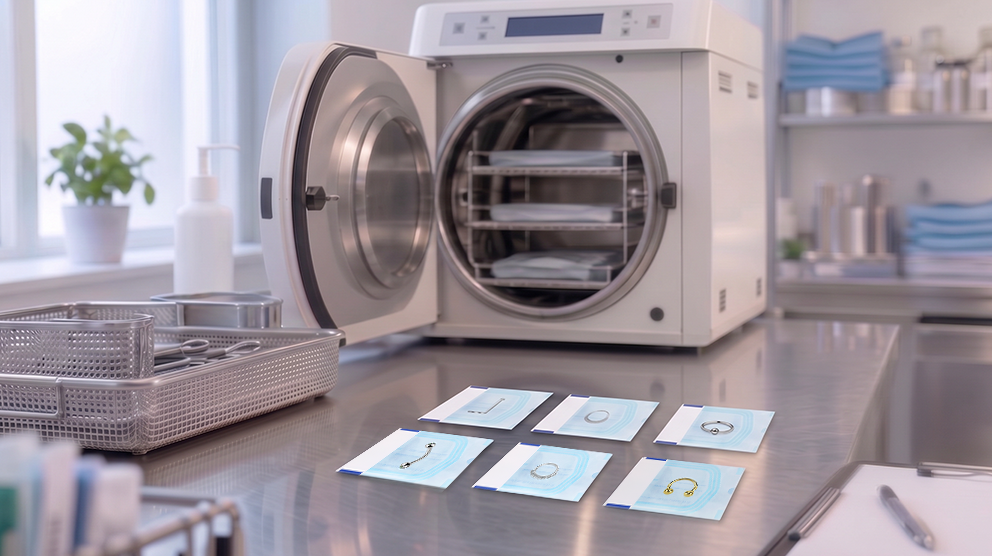
Once the cycle is complete, proper drying is essential before handling sterile items.
Instruments should remain inside the autoclave until fully dry. Removing items too early or handling them while still moist can compromise sterility.
Any pack that appears wet, damaged, or improperly sealed must be considered non-sterile and reprocessed. Moisture is one of the most common causes of post-sterilization contamination.
8. Storage & Shelf-Life Management
Sterilization does not end when the cycle finishes: it must be maintained during storage.
Sterile items should be stored in clean, controlled environments with low humidity and minimal handling. Packaging must be inspected before use, and any compromise in integrity requires re-sterilization.
While sterility is considered event-related rather than time-based, proper storage conditions are essential to maintaining it.
Most regulations recommend a shelf life of one month. To ensure that this period is observed, it is advisable to write the date on the pouch when extracting the items from the autoclave.
9. Biological Monitoring (Spore Testing)
Biological monitoring is the gold standard for validating sterilization effectiveness.
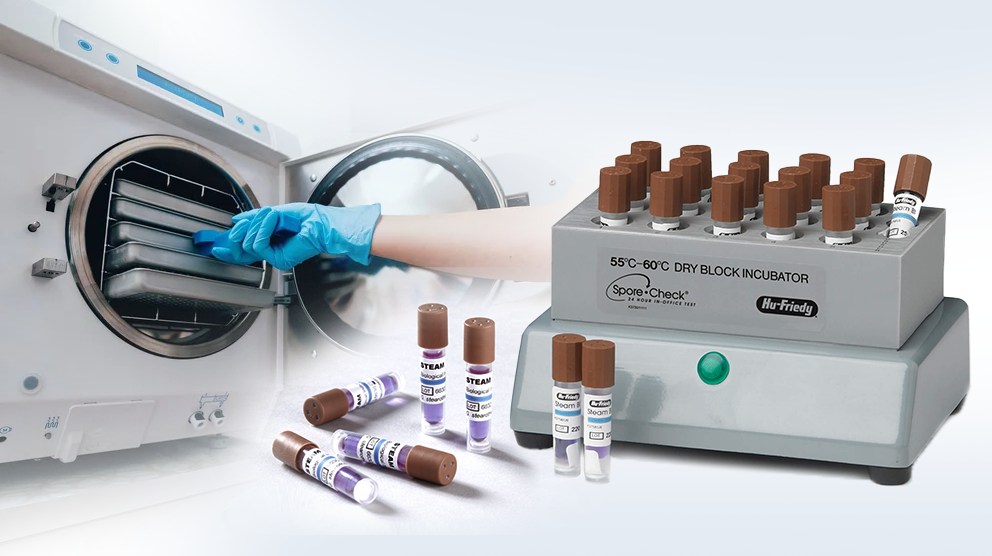
Weekly spore testing, using Geobacillus stearothermophilus indicators, confirms that the autoclave is capable of achieving actual microbial kill—not just reaching the correct conditions.
These tests should be processed through certified laboratories, and results must be documented for compliance and audit purposes. This is the only method that verifies real sterilization performance.
10. Preventive Maintenance & Calibration
An autoclave is a precision device that requires ongoing maintenance to remain reliable.
Regular cleaning of the chamber and components, scheduled servicing, and replacement of worn parts are all essential. Any repair or intervention should be followed by validation to ensure continued performance. Neglecting maintenance introduces variability into the process.
High-Risk Failure Points in Piercing Studios
Even in well-established studios, sterilization failures rarely come from lack of knowledge—they come from inconsistency in execution. Small deviations in routine can accumulate into significant risks, especially when processes are repeated multiple times per day.
Some of the most common high-risk failure points include:
- Inconsistent pre-cleaning protocols
- Overloaded autoclave chambers
- Lack of biological testing discipline
- Poor documentation practices (making traceability and compliance impossible)
- Misinterpretation of chemical indicators
- Rushing the process
These are not isolated mistakes or minor oversights. They represent system-level failures that compromise the reliability of the entire sterilization process.
Operational Impact: Efficiency vs. Risk
When sterilization is controlled and predictable, studios benefit from:
- Faster and more reliable instrument turnover
- Reduced procedural delays and interruptions
- Lower incidence of complications linked to contamination
- Improved readiness for inspections and regulatory audits
- Stronger client confidence, leading to higher retention and referrals
From an operational perspective, sterilization behaves like any other critical system: the more consistent the process, the more efficient the outcome. Variability introduces delays, rework, and risks, while standardization creates speed, reliability, and scalability. Process consistency directly translates into cost control and performance stability.
How to Identify Pre-Sterilized Products Ready To Ship or Request Custom Sterilization on Our Website
As we have seen at the beginning, not all products can be sterilized using an autoclave. At Acha Direct, customers can easily identify jewelry that is already available pre-sterilized and ready to ship or eligible for our Custom Sterilization service directly on our website.
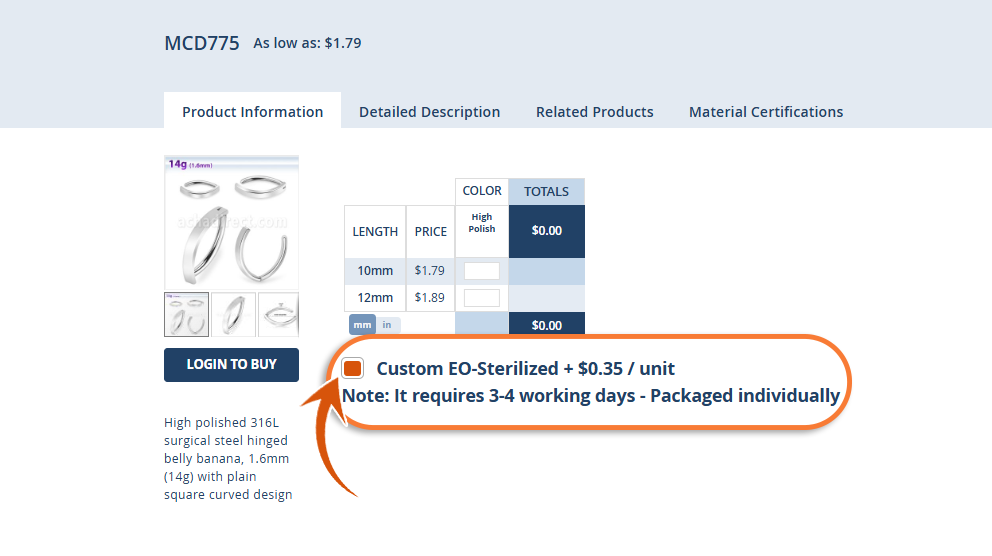
Products supplied pre-sterilized can be identified by their product codes beginning with “Z” (Find them all here), while eligible products can also be ordered with Custom EO Sterilization directly from the product grid. If a studio intends to sterilize jewelry in-house using an autoclave, the steam compatibility of the complete piece—including its material, setting, coating, stones, and other components—should be assessed separately. To easily determine which products you can autoclave from our website, you only need to check our Pre-sterilized products (codes that contain an initial Z) and our Custom Sterilization feature, as shown below:

For in-house steam sterilization, studios should separately verify whether the complete product is compatible with autoclave conditions. You need to exclude anything that contains silicone, rubber, or any other type of plastic, including synthetic opal. For instance, our single-use clamps are not suitable for autoclaving.
To avoid issues with glued crystals, we recommend ordering only products that are bezel set or prong set. They are a bit more expensive, but much more long-lasting in general, and are more suitable for steam processing when all materials and components are confirmed compatible.
Important distinction:
- Autoclave sterilization = steam sterilization performed in-house on compatible reusable instruments and, where appropriate, compatible jewelry.
- Acha Pre-Sterilized / Custom Sterilization = EO gas sterilization performed by an accredited medical facility on eligible Acha jewelry.
Considering a Strategic Alternative: Eliminating Sterilization Bottlenecks by Ordering Pre-Sterilized Jewelry
Forward-thinking studios can also reduce the amount of jewelry that needs to be sterilized in-house by purchasing pre-sterilized, ready-to-use jewelry. This can simplify jewelry preparation and reduce demand on autoclave capacity, while the studio continues to follow its required sterilization procedures for reusable instruments and other items processed in-house. Adopting pre-sterilized, ready-to-use jewelry reduces operational complexity and eliminates bottlenecks within the sterilization process. Also, it reassures your customers that the product is safe to use.
This approach offers several strategic advantages:
- Reduced dependency on autoclave capacity for jewelry processing
- Elimination of manual packaging, pouching, and validation steps for each piece of jewelry
- Lower equipment investment and ongoing maintenance costs, reserving the autoclave for reutilizable tools.
- Standardized and externally validated sterility assurance
This shift reflects a broader industry trend, where critical sterile products are often outsourced to controlled, certified sterilization systems to ensure consistency and traceability.
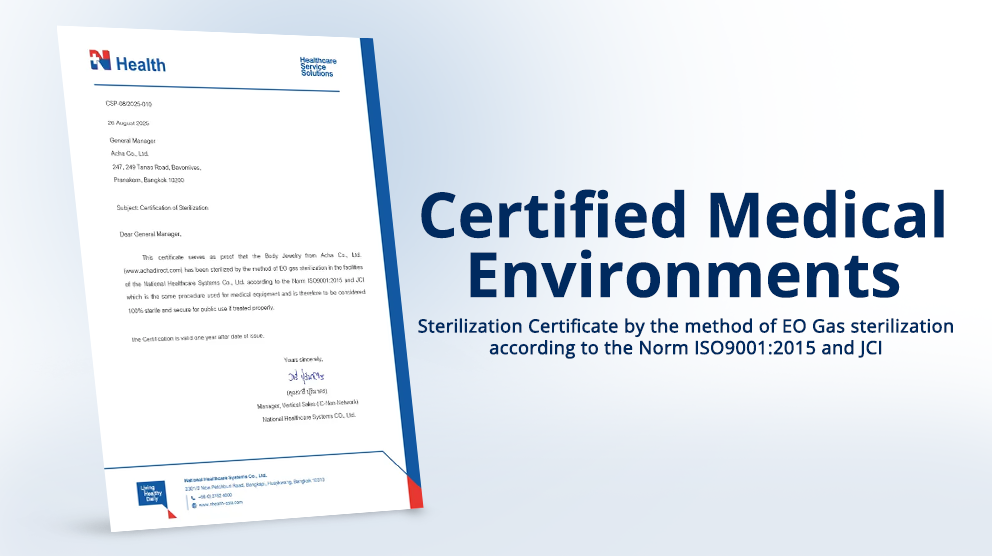
At Acha Direct, we align with this approach by offering EO (ethylene oxide) gas sterilization performed in certified medical environments. This method is widely used in the medical industry due to its ability to achieve deep, low-temperature sterilization without compromising material integrity, particularly important for complex or delicate components. To see our full catalog of pre-sterilized and ready-to-ship items, check here. Also, we offer the option to custom-sterilize all products that can withstand the process. You can select that option directly on the grid, for convenience. Although we offer these alternatives, it is key to highlight the fact that if reusable tools are not properly cleaned and sterilized before each use, there is still a high risk of contamination during procedures.
In the following image, you can see one of our sterilization certificates from an accredited medical facility, compliant with the Norm ISO 9001:2015, which you can see in more detail in the following link.
Final Thoughts: Sterilization as a System, Not a Step
Autoclave sterilization is not a single action—it is a controlled, validated system.
Studios that treat it as such achieve:
- Higher and more predictable safety outcomes
- Greater operational consistency
- Strong alignment with regulatory and industry standards
- A more scalable and resilient business model
Studios that don’t do it will introduce variability into one of the most critical aspects of their operation, and over time, that variability can translate into greater operational risk, reprocessing, and loss of consistency. Across both healthcare and professional piercing environments, one principle remains constant: reliable outcomes come from controlled systems, not isolated actions.
At Acha Direct, we apply the same principle to the sterilization solutions we offer. Quality should not simply be claimed: it should be supported by a controlled process, clear procedures, and verifiable documentation. By offering pre-sterilized jewelry and Custom EO Sterilization for eligible products, supported by documented sterilization processes that ensure best practices, we aim to give professional studios greater consistency, reduce in-house preparation and reprocessing, and make it easier to work with jewelry whose sterilization process can be clearly understood and traced.
Because in professional piercing, sterilization is not just about hygiene—it’s about control, precision, and accountability. The future of your business depends on it.
Frequently Asked Questions
What temperature should an autoclave run at for piercing instruments?
Typically, 134°C (273°F) for wrapped instruments, following manufacturer and ISO guidelines.
Do piercing studios need a Class B autoclave?
Using pre-sterilized jewelry can remove the need to sterilize that jewelry in-house, but it does not replace a studio’s sterilization requirements for reusable instruments or other items that require processing. Studios should follow applicable local requirements and manufacturer instructions when determining the sterilization equipment and procedures required for their operation. In general, Class B is recommended because it allows you to sterilize packaged and hollow instruments properly.
How often should spore testing be done?
At least once per week. It’s the only way to confirm actual sterilization effectiveness.
Are chemical indicators enough to verify sterilization?
No. They only confirm exposure conditions—not actual microbial kill.
Why is pre-cleaning essential before autoclaving?
Because organic residue can block steam contact and compromise sterilization.
Can wet packs be used after autoclaving?
No. Wet packs are considered non-sterile and must be reprocessed.
What is the most common autoclave mistake in piercing studios to avoid?
Overloading the chamber, which prevents proper steam penetration.
Can studios avoid using an autoclave for jewelry?
Yes. By using pre-sterilized jewelry from certified suppliers, studios can simplify workflows while maintaining sterility. This does not affect the sterilization requirements for reusable instruments or other items that must be processed by the studio.
Sources & Professional References
The practices and recommendations outlined in this article are supported by internationally recognized standards, infection control guidelines, and professional industry organizations. Key references include:
Association of Professional Piercers (APP)
The APP provides globally recognized guidelines for safe body piercing, including recommendations on sterilization, autoclave use, and infection control protocols.
https://safepiercing.org/2025-app-stance-on-point-of-use-steam-sterilization/Centers for Disease Control and Prevention (CDC)
The CDC publishes comprehensive infection control guidelines, including sterilization and disinfection standards for healthcare and clinical environments.
https://www.cdc.gov/infectioncontrolWorld Health Organization (WHO)
WHO guidelines on infection prevention and control emphasize the importance of validated sterilization processes in any procedure involving skin penetration.
https://www.who.int/teams/integrated-health-services/infection-prevention-controlISO 17665 – Sterilization of Health Care Products
International standard defining requirements for the development, validation, and routine control of moist heat sterilization processes (autoclaves).
https://www.iso.org/standard/84122.htmlEN 13060 – Small Steam Sterilizers
European standard specifying requirements and testing for small autoclaves used in medical and clinical environments.
Centers for Disease Control and Prevention (CDC) – Sterilization Monitoring
Guidelines on biological indicators (spore testing) and validation of sterilization processes.
https://www.cdc.gov/infection-control/media/pdfs/Guideline-Disinfection-H.pdfAAMI (Association for the Advancement of Medical Instrumentation)
Provides technical standards and best practices for sterilization, including steam sterilization and monitoring protocols widely used in healthcare settings.
https://www.aami.orgJournal of Hospital Infection
Peer-reviewed research on sterilization effectiveness, contamination risks, and infection control practices in clinical environments.
https://www.journalofhospitalinfection.com