

The Dangers Of Using Piercing Guns: A Total NO
If you operate a professional piercing studio or are planning to open one, there is one fundamental principle you need to understand: Piercing guns are not safe.
While they remain widely used in retail environments such as jewelry stores, kiosks, and pharmacies, their continued presence is not a reflection of safety or best practice: it is a result of convenience, low cost, and lack of professional standards in those settings.
From a clinical, hygienic, and biomechanical perspective, piercing guns present multiple risks that directly affect client health, healing outcomes, and long-term tissue integrity. More importantly, in today’s industry, where clients are informed and increasingly selective, these risks also impact your studio’s credibility and reputation.
The modern piercing industry has evolved. Clients are no longer passive recipients of a service; they are active decision-makers who research procedures, materials, and techniques. In this context, the use of outdated tools like piercing guns is not just unsafe: it is incompatible with professional positioning.
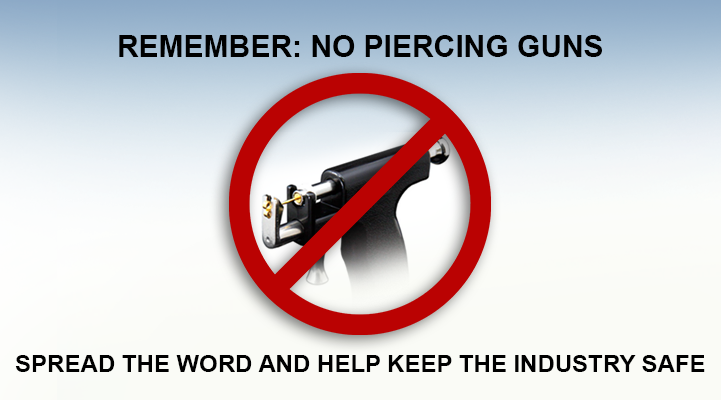
From Acha Direct’s perspective, the methods and tools used in any piercing procedure should reflect a clear commitment to safety, professionalism, and respect for the body. For this reason, we believe that continuing to rely on piercing guns is inconsistent with the standards of a modern and responsible studio, and that piercers aiming to build trust and credibility must adopt techniques that align with current best practices in the industry. Therefore, following the wise advice of the Association of Professional Piercers (APP) and similar institutions, Acha Direct strongly advises against the use of piercing guns.
Are Piercing Guns Safe?
The short answer is NO
This is not a matter of opinion or preference. Health authorities and industry experts highlight several critical issues:
- Piercing guns cannot be fully sterilized
- They increase the risk of infection
- They cause greater tissue damage compared to needles
Most piercing guns are made with plastic components and internal mechanisms that cannot withstand autoclave sterilization. Even if external surfaces are disinfected, the internal parts may retain bloodborne pathogens, bacteria, and organic residue. This creates a serious issue: cross-contamination between clients.
In a professional environment, where sterility is non-negotiable, any tool that cannot be fully sterilized should not be used. At Acha Direct, we are particularly concerned about this misconception. Many operators assume that surface cleaning is enough, but true sterilization requires validated, medical-grade processes, not just disinfection wipes.
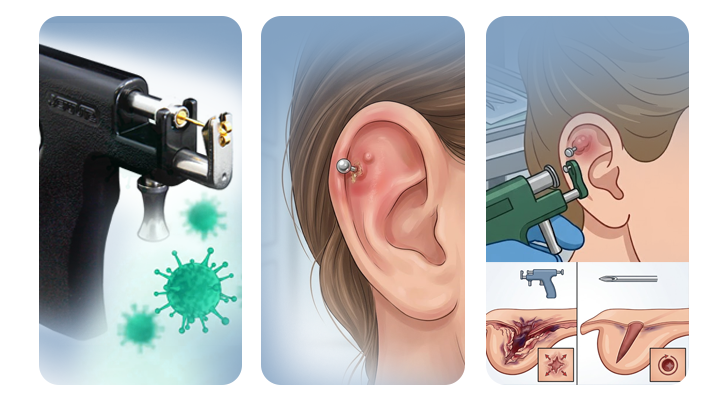
Piercing Gun vs Needle: The Critical Difference
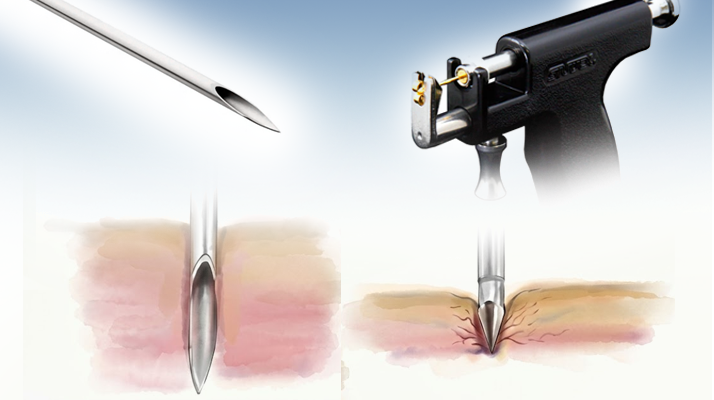
Understanding the difference between a piercing gun and a professional needle is essential to grasp why one is unsafe and the other is the industry standard. The key difference lies in how the tissue is penetrated: a needle cuts tissue cleanly while a gun forces jewelry through it.
Piercing Gun:
- Uses a spring-loaded mechanism
- Forces a blunt stud through the tissue
- Relies on pressure and impact
- Causes crushing and tearing (blunt force trauma)
Professional Needle:
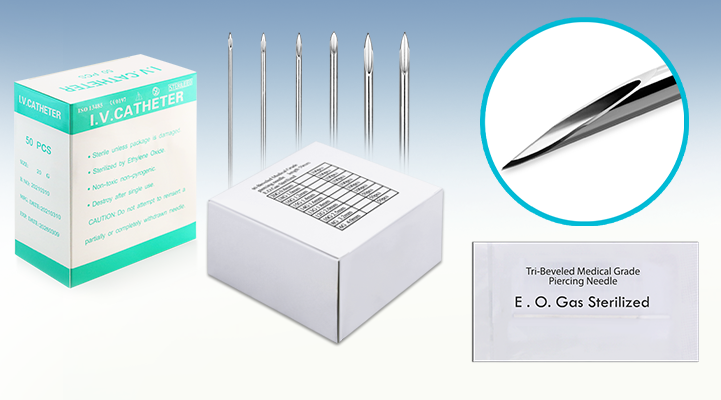
- Single-use and sterile
- Designed with a razor-sharp bevel
- Creates a clean, precise incision
- Minimizes tissue damage and supports better healing
- Gives you time to get feedback from the client and avoid cutting through nerves and other sensitive areas, such as cartilage
This difference directly affects healing time, pain levels, risk of complications, and long-term tissue health.
The Main Risks of Piercing Guns
1. Inability to Properly Sterilize
Sterilization is the foundation of any safe piercing procedure, and piercing guns fail at this basic requirement. This is non-negotiable.
Piercing guns are not fully autoclavable. Internal components can retain biological material, bacteria, and viruses, and surface cleaning alone is insufficient to eliminate contamination. Without full sterilization, there is always the possibility of cross-contamination, including exposure to serious infections.
In contrast, professional studios operate under strict protocols:
- Autoclave sterilization
- Biological spore testing
- Single-use sterile tools
- Pre-sterilized jewelry
This is not just best practice. It is the minimum standard.
2. Blunt Force Trauma
Unlike needles, piercing guns do not cut through tissue. Instead, they force jewelry through the skin. This results in tissue tearing, increased inflammation, greater swelling, slower healing, irregular wound channels that allow bacterial overgrowth, and more pain during and after the procedure.
From a biological perspective, trauma disrupts the body's natural healing response. The more damage caused, the more resources the body must allocate to repair it.
Professional needles, by contrast, create a precise channel that allows tissue to heal efficiently and predictably.
3. Cartilage Damage
The use of piercing guns on cartilage is particularly dangerous. Cartilages are, in general, more rigid and slower to heal.
When a piercing gun is used on cartilage:
- The force can fracture or damage cartilage structure
- It increases the risk of serious infections
- It can lead to permanent deformities
This can lead to chronic pain and, in severe cases, it can result in permanent structural damage. For this reason, many professionals strongly advise against using guns in cartilage areas.
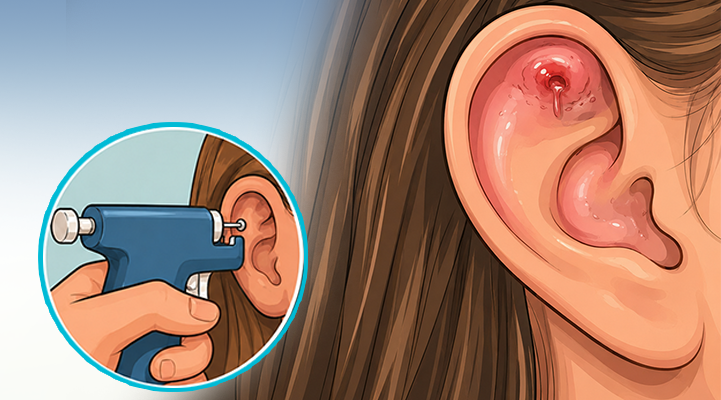
4. Increased Risk of Infection
Due to both inadequate sterilization and tissue trauma, piercing guns are associated with:
- Higher infection rates
- Delayed healing
- Greater likelihood of complications such as irritation or abnormal scarring
Infections are not only a health concern. They are a business risk. Negative client experiences spread quickly, especially in the age of social media.
Important: Even if you use pre-sterilized or autoclaved jewelry, the infection risk still exists because the piercing gun itself is surely compromised.
Studios that prioritize safety minimize these risks and build stronger client trust.
5. Poor Jewelry Quality and Fit
Piercing guns typically use pre-loaded studs that are not suitable for professional procedures. Common issues include:
- Lower-quality materials often contain unsafe levels of nickel
- Insufficient length to accommodate swelling
- Tight backings that trap bacteria and restrict airflow
Professional piercing requires appropriate jewelry selection, including:
- Implant-grade materials (such as ASTM F-136 titanium)
- Correct sizing
- Proper design for the anatomy
At Acha Direct, we strongly advocate for jewelry that supports healing, not compromises it.
6. Slower Recovery and More Complications
All the factors associated with piercing guns can ultimately lead to embedding, irritation, increased bacterial growth, and impaired healing. When the body is subjected to unnecessary trauma and exposed to potential contaminants, recovery becomes longer and less predictable. This often results in:
- Extended healing times
- Persistent irritation and discomfort
- Higher risk of complications such as infections, bumps, or hypertrophic scarring
- Increased likelihood of needing corrective procedures
From a physiological standpoint, healing depends on minimizing tissue damage and maintaining a clean, stable environment. Piercing guns compromise both. In contrast, professional piercing techniques (using sterile, single-use needles and appropriate jewelry) create optimal conditions for faster, cleaner healing with fewer complications.
Why Professional Piercers Do Not Use Guns
Professional standards are clear on this matter. Organizations such as the Association of Professional Piercers (APP) discourage the use of piercing guns due to safety concerns. In some regions, their use is restricted or regulated, reflecting growing awareness of these issues.
Instead, professional piercers rely on:
- Single-use sterile needles
- Implant-grade jewelry
- Controlled environments
- Strict hygiene and sterilization protocols
This is not just about compliance: it is about responsibility. Clients trust professionals with their bodies. That trust must be supported by the safest methods available.
What to Use Instead: The Professional Standard
For safe, reliable, and high-quality results, the only accepted method is sterile needle piercing. Key benefits include:
- Clean and precise incisions
- Reduced tissue trauma
- Lower risk of infection
- Faster and more predictable healing
- Better compatibility with high-quality jewelry
It also allows the piercer to control the angle and depth, adapt to individual anatomy, and ensure proper placement. This level of control is impossible with a piercing gun.
Why This Matters for Your Studio
The tools and methods you use directly impact your business. Using piercing guns can lead to:
- Higher complication rates
- Client dissatisfaction
- Damage to your professional reputation
In contrast, adopting proper techniques:
- Builds trust
- Improves healing outcomes
- Encourages repeat clients
- Positions your studio as a professional reference
In today's market, differentiation is critical. Safety, quality, and expertise are no longer optional; they are expected. Studios that align with these principles are not only safer: they are more successful.
Beyond these practical aspects, those piercers who love their job understand that performing a piercing is a very personal and intimate experience. Piercing guns completely destroy the bond that is created between piercer and piercee. That bond should be preserved at all times, because that bond not only guarantees the future of your business, but will also determine the long-term relationship with your client and the trust that they deposit in you.
Frequently Asked Questions
Can piercing guns be sterilized?
Not fully. Most piercing guns cannot be autoclaved, making full sterilization impossible.
Are piercing guns safe for earlobes?
Even in earlobes, they present higher risks compared to sterile needle techniques. Considering the complications that could arise, any additional risk should be avoided.
Why are needles better than piercing guns?
Needles create a clean incision, which reduces trauma, lowers infection risk, and improves healing.
Do professional piercers use piercing guns?
Never. Professional studios use sterile, single-use needles exclusively. They take pride in it because any professional piercer understands that the client’s safety is paramount and non-negotiable.
Final Takeaway
Piercing guns may appear convenient, but they introduce unnecessary and avoidable risks.
Professional needle piercing remains the industry standard because it is:
- Safer
- More precise
- More hygienic
- Better for long-term healing outcomes
The future of the piercing industry is built on education, quality, and trust. Studios that embrace these principles are not only protecting their clients—they are strengthening their position in an increasingly competitive market and cementing their future.
At Acha Direct, we firmly support this direction. The industry is moving toward higher standards, and every decision, from tools to jewelry, plays a role in shaping that future.
How Can Acha Help You Select The Right Tools And Jewelry
At Acha, we fully understand the needs of professional piercers. We have been working with them for 25 years and selecting the best materials to guarantee the optimal experience, and we are here to support you.
Contrary to what many might believe, there is no need to have a wide range of needles in your arsenal. Yes, you will need different shapes to perform in different parts of the body, but our research suggests that a few models can do the work. For this reason, even though we have a vast catalog of products, our offering of needles is limited and to the point, so you don’t get confused with too many choices. You can see our full needle catalog here.
A very interesting option that we would like to highlight is our Professional Piercing Kits, in which we bundle a needle together with the jewelry to ensure that you are using the right tool. Convenient and extremely safe.
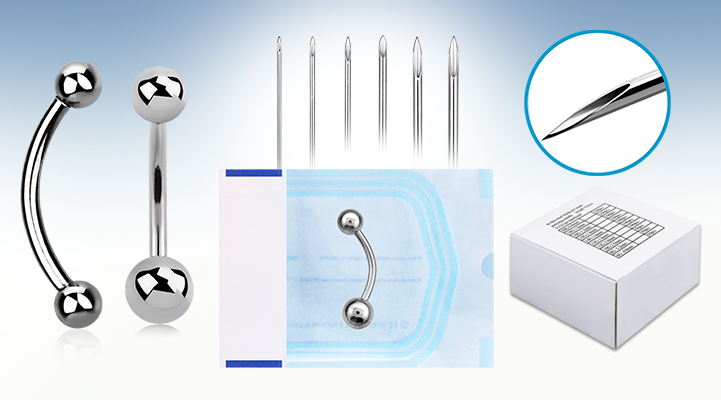
Finally, we provide a wide variety of pre-sterilized products with certified materials to guarantee the safest performance. Additionally, we offer the option to custom-sterilize any product on our website that can be EO-Gas sterilized. Of course, all our products are sterilized in a certified medical facility. You can check our products here.
We will keep dedicating our efforts to preserving safety and best practices, not only with our products, but also by sharing our knowledge and expertise with the new generations of piercers.
Sources & Professional References
The concerns outlined in this article are supported by medical literature, public health guidelines, and professional industry standards. Key references include:
Association of Professional Piercers (APP)
The APP is the leading international organization setting safety and hygiene standards in body piercing. Their guidelines clearly discourage the use of piercing guns due to sterilization limitations and tissue trauma risks.
Centers for Disease Control and Prevention (CDC)
The CDC provides general infection control guidelines that highlight the importance of sterilization and the risks associated with reusable, non-sterilizable instruments.
Journal of Wound Care
Clinical studies on tissue trauma and healing confirm that clean incisions (such as those made by needles) result in better healing outcomes compared to blunt force injury.
Elayne Angel – The Piercing Bible
A widely recognized technical and professional reference in the industry, covering best practices, anatomy-specific piercing, and jewelry selection.
World Health Organization (WHO)
WHO infection prevention guidelines reinforce the importance of proper sterilization and single-use instruments in procedures involving skin penetration.